
How Russia attempted to promote repressive control at the UN level

Mihail
2026-08-24
Read time
3 minutes
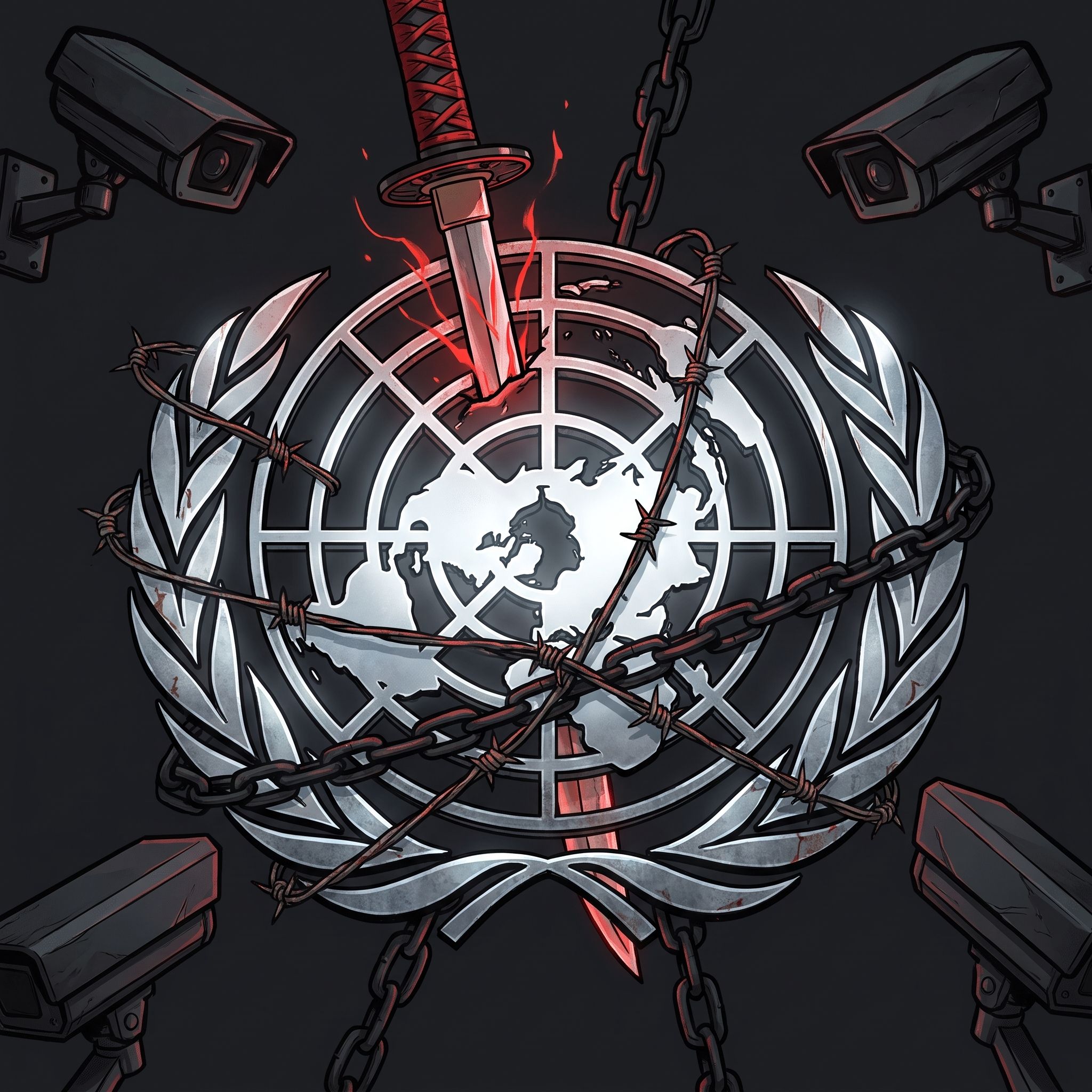
By the end of 2026, a new international document—the UN Convention on Cybercrime—is scheduled to be submitted to the State Duma for ratification. Although Russia was the original initiator of this agreement, Moscow now plans to ratify it with certain reservations, as it does not agree with all of the final provisions.
Key mechanisms of the global agreement
The treaty aims to establish global cooperation in solving online crimes. Under the document, law enforcement agencies from different countries can request assistance from their foreign counterparts in freezing illicit assets and providing digital evidence. To achieve this, signatory states commit to enabling real-time internet traffic interception and storing it for at least 90 days.
This initiative resembles Russia's 'Yarovaya Law,' passed ten years ago, which mandated local telecom operators to store user messages for up to six months and metadata for up to three years. However, the new international agreement does not demand total surveillance of all citizens, requiring states only to have the technical capability to monitor specific suspects at the request of foreign partners.
Alternative to the Budapest Convention
Previously, international law enforcement cooperation relied on the 2001 Budapest Convention, which has been joined by over 80 countries, including the US, Canada, and European nations. Russian authorities participated in its drafting but ultimately refused to sign. According to European experts, including former committee executive secretary Alexander Seger, this was due to a misinterpretation of the treaty, in which Moscow perceived a threat to its national sovereignty.
As a replacement, Russia decided to draft its own global treaty. The first drafts were presented under the auspices of the FSB at an international security forum in St. Petersburg in 2016. During discussions at the UN, the title and focus of the document shifted several times, evolving from countering information crime to combating the use of information technologies for criminal purposes.
Conflict of interest and human rights protection
Russian authorities sought to expand the list of offenses covered by the convention as much as possible. This triggered strong resistance from Western nations and leading human rights organizations, such as Amnesty International and Human Rights Watch, which warned of threats to journalists and activists. Consequently, politically motivated articles regarding extremism, terrorism, the rehabilitation of Nazism, and criticism of authorities were excluded from the final text, leaving only classic cybercrimes like hacking, fraud, and illicit content distribution.
Western diplomats also succeeded in retaining human rights guarantees in the document, along with the right to refuse cooperation if a request is driven by political persecution. Attempts by Russia, Iran, and Syria to remove these clauses failed during voting at the UN General Assembly.
Since the final version does not fully satisfy Moscow, Russian representatives plan to continue their push for expanded control. New UN sessions are scheduled for 2027 in Vienna and 2028 in New York to discuss an additional protocol to the convention. Through this protocol, Russia may attempt once again to legitimize international prosecution for justifying terrorism, defaming the military, and distributing unwanted information.
With a reliable service like HiroVPN, users do not have to worry about the risks of personal data interception and can always stay protected online.